
Personal Attention & Quality Legal Service Since 1961
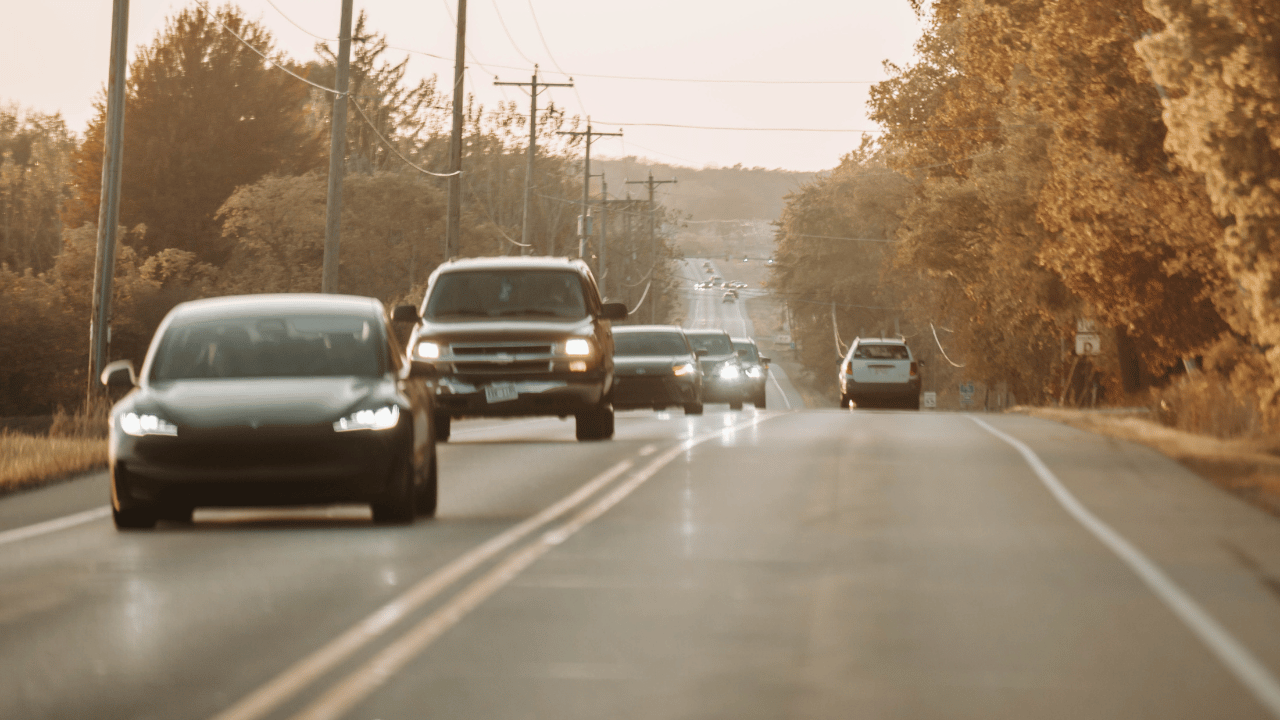
Car accidents are not always situations where one driver is completely responsible and the other did nothing wrong. Sometimes two drivers make mistakes that contribute to the same collision. Other accidents involve several vehicles or additional parties whose actions may have played a role.
Arizona law has a system for addressing these situations.
Under Arizona's comparative negligence rules, an injured person is not necessarily prevented from recovering compensation simply because they share some responsibility for the accident. Instead, the amount of compensation may be reduced according to that person's percentage of fault.
At Skousen, Gulbrandsen & Patience, PLC, we believe accident victims should understand how these rules work, particularly when an insurance company claims they contributed to a collision. A disagreement about even a relatively small percentage of fault can have a significant financial impact in a serious injury case.
Comparative negligence, sometimes discussed as comparative fault, is a legal principle used when more than one person contributed to an injury.
Imagine that two drivers approach an intersection. One driver makes an unsafe turn, but the other driver is traveling faster than conditions reasonably allow. If a collision occurs, determining responsibility may require examining the actions of both drivers.
Instead of treating responsibility as an all-or-nothing question, comparative negligence allows fault to be divided according to each person's contribution to the accident.
Arizona's statute specifically provides that when comparative negligence applies, a claimant's action is not barred solely because the claimant shares fault. Instead, damages are reduced in proportion to the claimant's relative degree of fault. The Arizona Legislature sets out this rule in Arizona Revised Statutes § 12-2505.
This distinction can be extremely important after a car accident.
Arizona follows what is commonly described as a pure comparative negligence system.
Under A.R.S. § 12-2505, a claimant's damages can be reduced according to the claimant's relative degree of fault rather than automatically eliminated because the claimant bears some responsibility.
Consider a simplified example.
Suppose an injured person establishes $100,000 in damages from a collision. After considering the evidence, the person is determined to have been 20 percent at fault.
The recoverable damages would be reduced by 20 percent, resulting in $80,000.
If the same person were determined to be 40 percent responsible, the damages would be reduced by 40 percent.
The percentage matters.
This is one reason disputes over fault can become such an important part of an Arizona car accident claim. An insurer arguing that an injured person was 30 percent responsible rather than 10 percent responsible is not simply debating a technical legal issue. The difference could substantially change the amount of compensation at stake.
Determining fault requires examining the facts surrounding the collision.
Arizona law provides additional guidance for cases involving multiple responsible parties. Under Arizona Revised Statutes § 12-2506, the trier of fact considers the fault of people who contributed to the injury and apportions relative degrees of fault. The statute also generally provides that each defendant is responsible for damages in direct proportion to that defendant's percentage of fault, subject to statutory exceptions.
In a car accident case, evidence used to evaluate fault may include:
A person's recollection of the accident is important, but liability should not necessarily be determined from one driver's account alone.
A police report may contain observations from the responding officer, statements from drivers and witnesses, diagrams, identifying information, and other details about the collision.
The report can become an important part of the investigation, although it is not necessarily the only evidence relevant to determining legal fault.
Photos taken immediately after an accident can preserve details that disappear once vehicles are moved and the roadway is cleared.
Video can be even more valuable. Dashcams, business surveillance systems, residential security cameras, and other recording devices may provide evidence about what happened immediately before the collision.
Independent witnesses can provide another perspective when drivers disagree about what occurred.
Getting witness contact information at the accident scene can therefore be important. Finding the same witness weeks or months later may be much more difficult.
Comparative negligence can arise in many different types of motor vehicle accidents.
For example, one driver might make an unsafe lane change while another is speeding. A driver might turn left across traffic while the approaching motorist is distracted. One vehicle might stop unexpectedly while the following driver fails to maintain an appropriate distance.
Other behaviors that may become relevant include:
These situations are highly fact-specific. The existence of one potentially negligent action does not automatically establish a particular percentage of fault.
The evidence surrounding the collision must be evaluated.
An insurance company may argue that you contributed to the accident.
That does not mean you should automatically accept its assessment.
Insurance adjusters investigate accidents and evaluate liability as part of the claims process. If an insurer assigns part of the responsibility to you, that determination can affect the amount it is willing to offer.
This makes evidence particularly important.
Suppose the other driver claims you entered an intersection after the light turned red. Traffic camera footage or an independent witness may contradict that account. If an insurer claims you were speeding, physical evidence or other records may become relevant to determining whether that allegation is supported.
You should also be careful about making speculative statements immediately after an accident. Saying something such as "maybe I could have stopped sooner" while shaken at the scene does not necessarily reflect a complete understanding of how the accident happened.
Provide accurate information. If you do not know something, do not guess.
Some accidents involve more than two drivers.
A chain-reaction collision, for example, may involve several vehicles and multiple actions contributing to the final injuries. Commercial vehicle accidents may raise additional questions involving drivers, employers, contractors, vehicle owners, or other parties.
Arizona law specifically addresses the allocation of fault among multiple parties and, in certain circumstances, nonparties.
A.R.S. § 12-2506 states that when percentages of fault are assessed, the trier of fact considers the fault of those who contributed to the injury, including certain nonparties when statutory requirements are satisfied.
Cases involving several potentially responsible parties can therefore require a much broader investigation than a straightforward two-car collision.
Comparative negligence makes preserving evidence especially important.
An insurance claim may involve two separate questions:
Strong medical documentation may establish the severity of an injury, but it does not necessarily establish how the accident happened. Liability evidence serves a different purpose.
After an accident, preserve photographs, correspondence, medical documentation, repair estimates, witness information, and any other records related to the collision.
Some evidence may disappear quickly. Surveillance systems can overwrite footage. Vehicles are repaired or sold. Roadway conditions change. Witness memories become less precise.
The earlier relevant evidence is identified and preserved, the better the opportunity to develop an accurate picture of the collision.
A disputed-fault case may require more investigation than an accident where responsibility is clear.
Depending on the circumstances, an attorney may examine accident reports, interview witnesses, obtain available video, review photographs, evaluate insurance coverage, preserve relevant evidence, and work with appropriate experts.
An attorney can also communicate with insurance companies about allegations of comparative fault.
At Skousen, Gulbrandsen & Patience, PLC, we look at the evidence surrounding an accident rather than simply accepting an insurance company's initial characterization of what happened.
Every percentage point can matter when substantial damages are involved.
One of the most important things to understand about Arizona comparative negligence is that sharing responsibility for an accident does not automatically mean you cannot pursue compensation.
Arizona law specifically provides for damages to be reduced according to a claimant's relative degree of fault when comparative negligence applies. The state's allocation rules can also become more complicated when several people or entities contributed to an accident.
If someone tells you that you were partially responsible for a collision, do not assume that ends the matter.
At Skousen, Gulbrandsen & Patience, PLC, we represent people injured in motor vehicle accidents throughout Phoenix, Mesa, and communities across Arizona. We can review the circumstances of a collision, examine disputed liability issues, and help you understand how Arizona's comparative negligence laws may apply to your case.
If you have been injured in an Arizona car accident and fault is being disputed, contact our team to discuss your legal options.
Photo by Quang Vuong